
If you asked your last 10 new clients how they found your vet clinic, what would they say?
Google? A recommendation from a friend? Facebook? Perhaps they simply noticed your clinic while driving past.
These answers can be useful, but they don’t always tell the full story. The way pet owners discover and choose a vet clinic is rarely limited to one interaction.
Understanding that journey can help you make better decisions about your marketing and how it supports your clinic’s growth.
Where do most new vet clients come from?
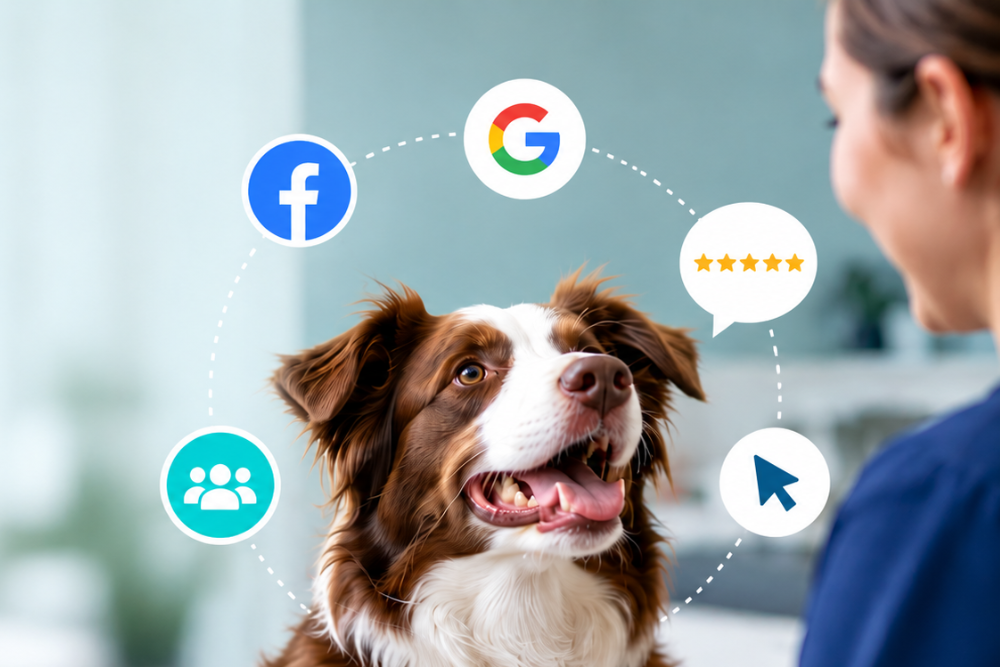
Pet owners can discover veterinary clinics through several channels, including Google searches, online reviews, social media, personal recommendations, local advertising and community visibility.
Which channels matter most will depend on your clinic, its location and the pet owners you’re trying to reach.
But there’s an important difference between how someone first hears about your clinic and what ultimately prompts them to book.
For example, a pet owner might discover your clinic through Facebook but only book an appointment several months later after searching for a vet on Google.
If you only look at the final interaction, you could overlook the marketing that introduced them to your clinic in the first place.
Can you accurately track where new vet clients come from?
Asking new clients how they heard about your clinic is a good starting point, but it has limitations.
Consider this example:
- A pet owner sees your clinic advertised on Facebook.
- A friend recommends your clinic a few weeks later.
- They search for your clinic on Google and read your reviews.
- They visit your website and book an appointment.
When reception asks how they found you, the client answers, “Google.”
That answer isn’t wrong. Google helped them find your clinic when they were ready to book.
But Facebook, word of mouth and your reviews may have helped build the familiarity and confidence that influenced their decision.
This is why new-client surveys, website analytics and advertising reports should be treated as different pieces of information, rather than a single definitive answer.
Even digital tracking can’t capture every interaction, particularly recommendations and other offline experiences.
What’s the difference between brand awareness and generating bookings?
Both play important roles in veterinary marketing, but they achieve different things.
Brand awareness helps pet owners become familiar with your clinic. This might happen through social media, community involvement, educational content or advertising.
Booking-focused marketing helps pet owners take action when they need veterinary care. This could include Google Ads, a well-optimised website or an easy online booking process.
Imagine two vet clinics offering similar services.
One has been regularly appearing in local pet owners’ social feeds, sharing helpful advice and introducing its team. The other has little visibility until someone actively searches for a vet.
When a pet owner eventually needs an appointment, familiarity may influence which clinic they consider.
That doesn’t mean awareness always leads to a booking, or that every clinic needs to advertise on social media. It means that marketing can influence a decision well before someone is ready to become a client.
How can vet clinics better understand where clients come from?
Rather than relying on one measure, look for patterns across several sources.
For example:
- New-client feedback: What do pet owners remember about discovering your clinic?
- Google Business Profile: Are people finding your clinic through local searches and taking actions such as calling or visiting your website?
- Website analytics: Where is website traffic coming from, and what actions are visitors taking?
- Advertising results: Are campaigns reaching the intended audience and generating relevant interest or enquiries?
- Clinic business results: Are new-client numbers, appointment volumes and your active client base changing over time?
None of these provide a complete picture on their own. However, looking at them together can help you understand whether your marketing is building visibility, encouraging enquiries and supporting clinic growth.
For example, if your Google visibility and website enquiries are increasing, are you also seeing growth in new-client numbers or appointments?
Or if you’re investing in ongoing client communications, what’s happening to your active and lapsed client numbers?
These comparisons won’t necessarily tell you which marketing activity caused a result, but they can highlight trends worth exploring.
Marketing numbers tell you how pet owners are interacting with your clinic. Business numbers help you understand whether your clinic is moving towards its goals.
Why does this matter for your vet clinic’s marketing?
If you judge every marketing activity by how many bookings you can directly attribute to it, you risk undervaluing the work that builds awareness and trust.
On the other hand, focusing entirely on reach and engagement without considering enquiries, appointments or business growth can make it difficult to understand whether your marketing is supporting your clinic’s goals.
It’s also important to remember that marketing isn’t the only factor influencing business performance. Appointment availability, staffing, pricing and client experience all contribute.
The aim isn’t to prove that every booking came from a particular channel.
It’s to understand how your marketing activities work together, and whether your clinic’s business results are moving in the direction you want.
That gives you a more useful foundation for deciding where to focus your time and budget.