
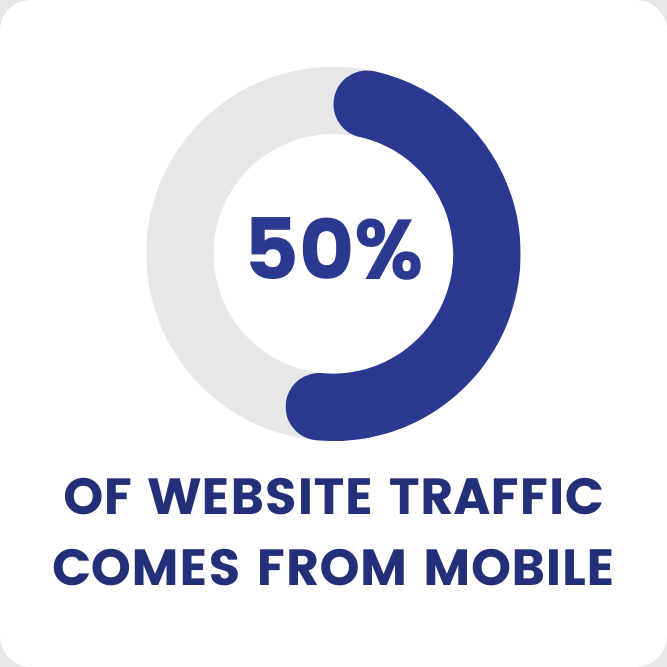
At least half of vet website traffic comes from mobile devices and for some clinics, it can be even higher! When a pet owner searches for a vet, checks reviews, or looks for opening hours, they’re usually doing it on their phone.
That means the first real interaction they have with your clinic isn’t in person. It’s on a small screen, often under time pressure.
And that experience shapes whether they book… or move on.

Mobile behaviour is different
Small things matter more on mobile. If these are happening on your website, they create friction for potential clients:
- Buttons that are hard to tap
- Text that’s difficult to read
- Booking links buried below the fold
- Pages that take a few extra seconds to load
Individually, these may seem minor, collectively, they quickly reduce confidence and conversions.
Many clinics invest in paid advertising such as Google Ads, but if the mobile experience isn’t built for conversion, that traffic doesn’t translate into appointments. Over time, weaker engagement and lower conversion rates can also impact campaign efficiency and reduce overall return on investment.
Google is mobile-first
Google now uses mobile-first indexing. That means it primarily evaluates the mobile version of your website when determining how you appear in search results.
In simple terms, Google often looks at your site as if it were on a smartphone so if your mobile experience is slow, clunky or unclear, it can affect:
- visibility
- rankings
- user engagement
- calls and bookings
It’s not just about how your website looks, it’s about how it performs.
What is mobile-first indexing?
Mobile-first indexing means Google uses the mobile version of your site’s content, crawled using a smartphone user agent, for indexing and ranking.
If your mobile site is missing content, structured poorly or technically weak, that’s the version Google sees first.
To ensure you’re putting your best foot forward, your mobile site should:
- Be built using responsive design (Google’s preferred approach), dynamic serving or properly configured mobile URLs
- Allow Google to access and render content correctly
- Maintain consistent content between desktop and mobile
- Keep titles and meta descriptions aligned across versions
- Follow Google’s image and video best practices
- Have the same content across desktop and mobile. To help reduce layouts on mobile you can use tabs or accordions to ensure all content still exists in the page structure.
Core mobile performance benchmarks
When it comes to mobile, faster is better and less is more.
According to Google performance guidance, high-performing mobile sites typically aim for:
| Metric | Description | Best Practice |
|---|---|---|
| Average Speed Index | How quickly the mobile page displays content to users. | Under 3 seconds |
| Average Time to First Byte | How fast and responsive a mobile web server is in a specific category | Under 1.3 seconds |
| Average Request Count | The number of individual pieces of content needed to display the entire mobile page | Fewer than 50 |
| Average Page Weight Bytes | The total size of a mobile webpage | Less than 500KB |
Source: Think with Google
And if all of this sounds too technical… that’s ok!
We have a specialised technical team that can assess your site’s mobile performance, identify where friction exists and outline clear opportunities to strengthen both visibility and bookings.
How smart clinics optimise for mobile
The strongest-performing clinics treat mobile as its own experience, not just a smaller version of their desktop site.
They understand there’s at least a 50% chance their next booking comes from a mobile user. Small refinements around speed, clarity, layout and booking visibility, can create measurable improvements.
If you haven’t reviewed your website recently from a mobile-first perspective, there may be opportunities to improve how easily pet owners can call and book with you.