
One of the biggest challenges for veterinary clinics is remaining visible and relevant between appointments.
Many clinics communicate well during visits, but disappear afterwards until the next reminder, vaccination or booking.
The clinics that stay top-of-mind with pet owners are usually the ones that continue communicating consistently between visits through educational content, preventative care messaging and ongoing client communication.
This helps strengthen:
- trust
- familiarity
- preventative care compliance
- repeat bookings
- long-term client loyalty

Do email newsletters work for veterinary clinics?
Yes, email newsletters can work extremely well for veterinary clinics when they focus on educational and helpful content rather than constant promotion.
Many pet owners actively want trusted advice about:
- pet health
- preventative care
- nutrition
- parasite prevention
- dental health
- seasonal risks
Educational newsletters help clinics:
- stay visible between visits
- reinforce preventative care
- remain top-of-mind
- encourage routine check-ups
- strengthen long-term client
- relationships

For many clinics, newsletters become one of the most consistent ways to maintain ongoing engagement with pet owners throughout the year.
Why should a vet clinic send regular emails?
A vet clinic should send regular emails because consistent communication helps strengthen trust and keeps the clinic connected to pet owners between appointments.
Without regular communication, many clinic relationships become purely transactional, only hearing from the clinic when:
- reminders are due
- treatment is needed
- payment is required
Regular educational communication helps pet owners continue seeing the clinic as:
- helpful
- proactive
- trustworthy
- invested in their pet’s wellbeing
Importantly, regular emails also help reinforce the value of preventative care before problems occur.
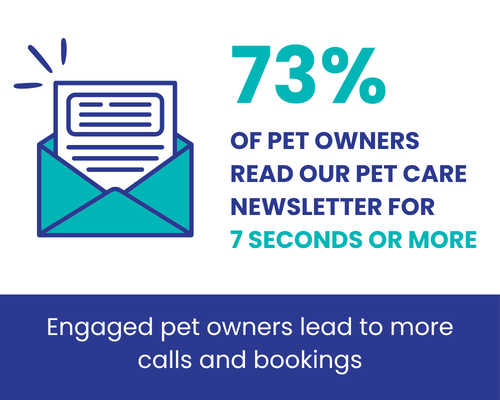
tracking engagement for a vet newsletter

What type of content builds trust with pet owners?
The type of content that builds trust with pet owners is usually educational, reassuring and genuinely helpful.
This may include:
- preventative care advice
- parasite prevention education
- dental health awareness
- seasonal pet safety tips
- nutrition guidance
- behind-the-scenes clinic insights
- introductions to team members
- explanations of procedures or treatments
Content builds trust when it helps pet owners feel informed, supported, reassured and understood.
Over time, these small educational touchpoints strengthen familiarity and confidence long before a pet owner needs to make a booking.
Can email marketing help vet clinics retain clients?
Yes, email marketing can help vet clinics retain clients by maintaining regular communication and reinforcing the relationship between visits.
Clinics that communicate consistently are often more likely to:
- remain top-of-mind
- encourage repeat visits
- improve preventative care compliance
- strengthen client loyalty
- reduce price-driven shopping around
Retention is not only about reminders.
It’s also about continuing to educate and engage pet owners throughout the year so the clinic remains familiar, trusted and relevant.
How often should a vet clinic communicate with pet owners?
Most clinics benefit from communicating consistently rather than occasionally.
This may include:
- monthly newsletters
- educational social media posts
- preventative care campaigns
- seasonal reminders
- updates about clinic services
- pet health education
Consistency is usually more important than frequency.
Small, regular communication touchpoints help clinics remain visible and trusted within their local community over time.
Can communication improve preventative care bookings?
Yes, communication can significantly improve preventative care bookings because pet owners are more likely to act when they understand:
- why preventative care matters
- what risks exist
- what signs to look for
- when action should be taken
Educational communication helps shift pet owners from reactive behaviour to proactive care, leading to:
- earlier intervention
- increased routine check-ups
- stronger compliance
- improved long-term pet health outcomes
In many clinics, communication becomes an extension of the care experience itself.
Why staying visible matters for veterinary clinics
As competition increases, pet owners have more choice and more information available to them than ever before.
The clinics that remain top-of-mind are rarely invisible between appointments.
They continue reinforcing:
- what they stand for
- how they help
- what they value
- why their care matters
Importantly, this doesn’t require constant promotion.
It requires consistent, valuable communication that helps pet owners remember and trust the clinic over time.